
Rowerek 12", 14" czy 16" - który wybrać
Kids' bikes come in standardized wheel sizes — 12", 14", 16", 20", 24". For ages 2 to 7, you'll only deal with the first three. Here's the practical guide to choosing between them.
The short answer
| Wheel size | Type | Inseam range | Typical age |
|---|---|---|---|
| 12" | Balance bike | 33-50 cm | 2 to 5 |
| 14" | Pedal bike | 44-56 cm | 4 to 6 |
| 16" | Pedal bike | 50-60 cm | 5 to 7 |
12" balance bike — the first ride
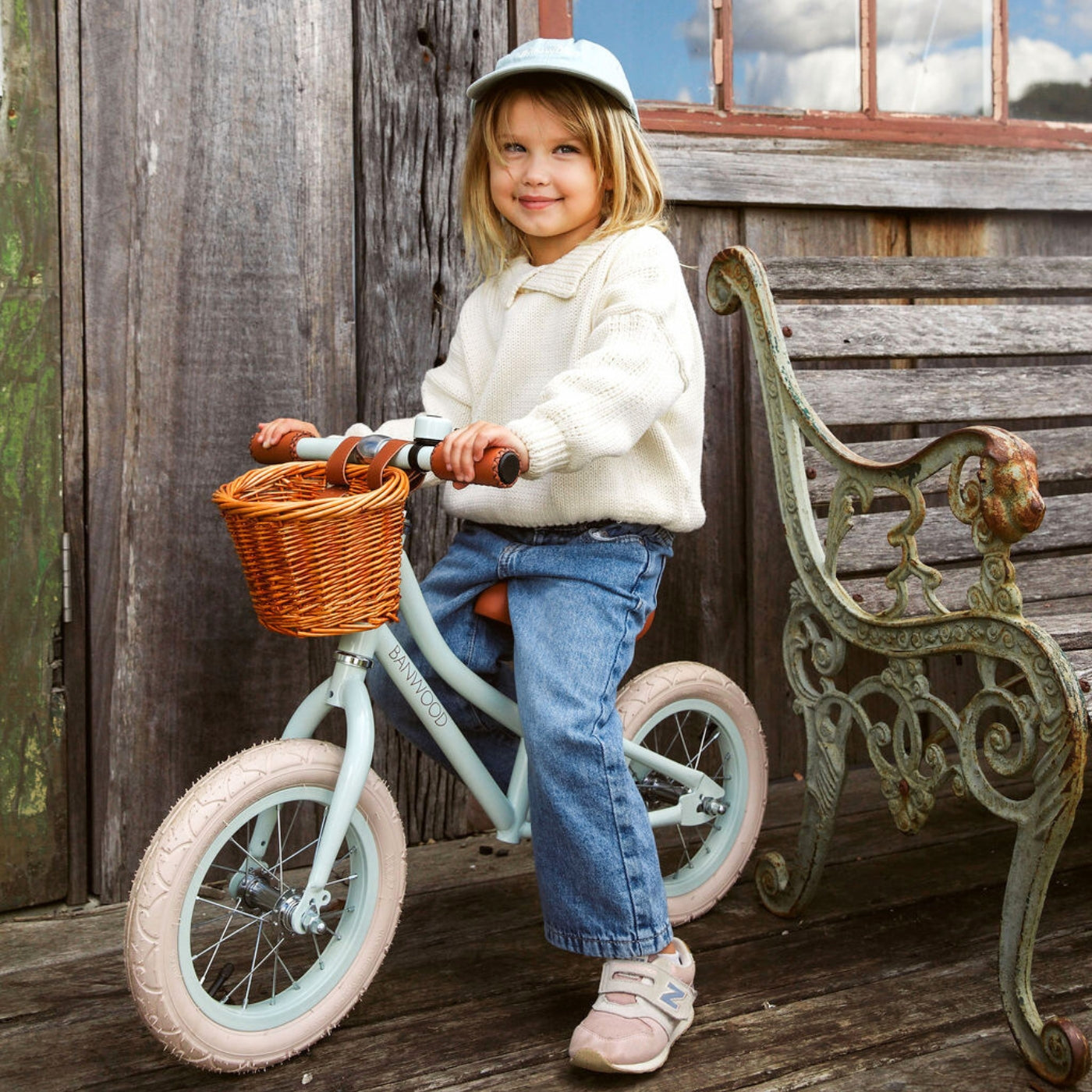
12-inch balance bikes are the standard for ages 2 to 5. The wheels are small enough that the bike is light, the saddle low enough that toddlers can put feet flat on the ground, and there are no pedals to confuse the learning process.
Banwood's 12" balance bike is the First Go. Saddle adjusts from 38 cm to 50 cm — meaning it grows with the child for 2-3 years.
Why 12" is the universal first size: physiology. Children under 5 have leg length and weight distribution that work best on small wheels. Heavier 14" bikes for 3-year-olds tend to fall over more easily, creating fear cycles.
14" pedal bike — the transition
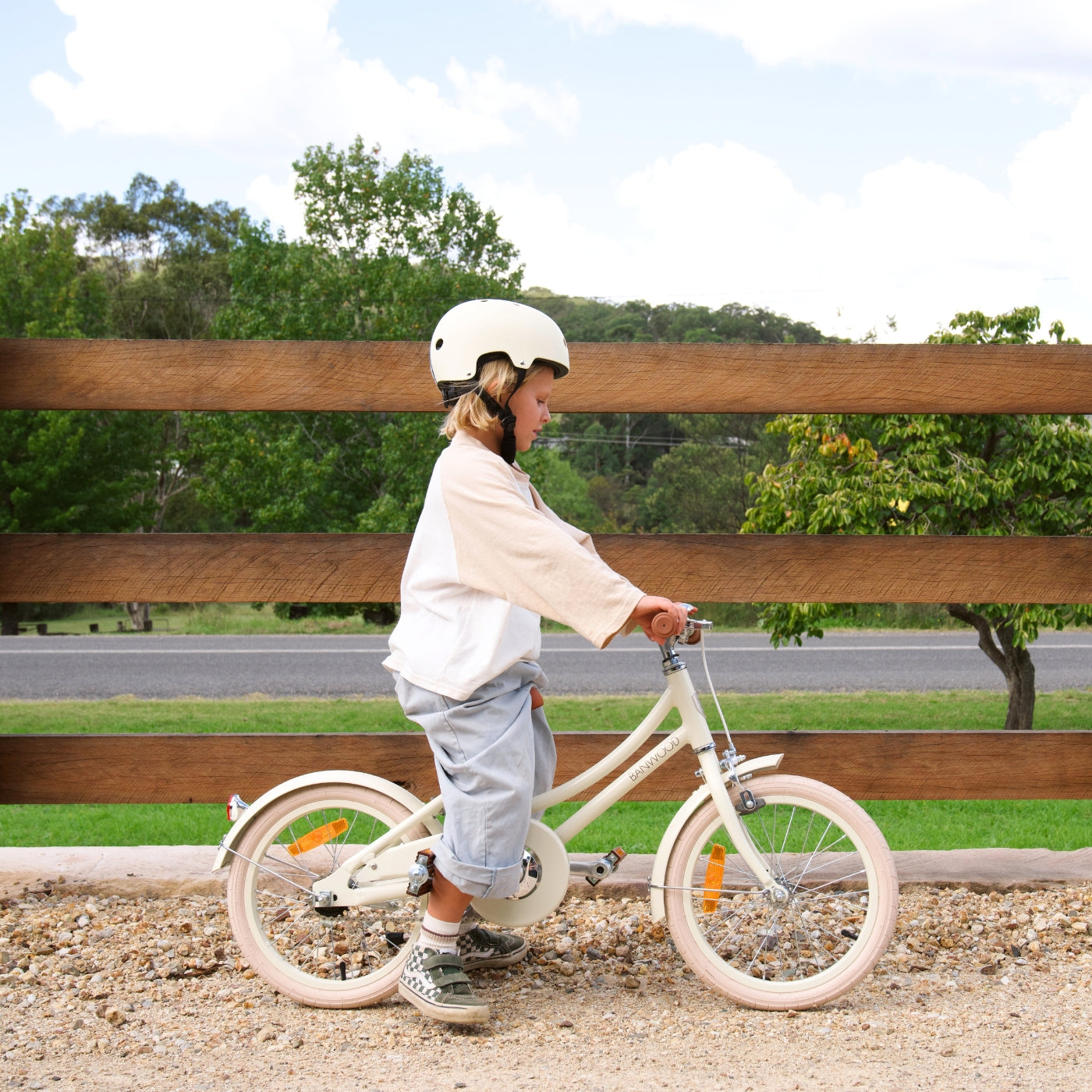
14-inch pedal bikes are the bridge from balance bike to "real" pedal bike. They're sized for 4-year-olds who've mastered balance and are ready to add pedaling. The Banwood Classic 14" has hand brakes from day one — children learn to brake correctly before bad habits form.
Don't skip 14". Going straight from 12" balance to 16" pedal is too big a jump for most kids — the geometry change is significant. 14" is the natural step.
16" pedal bike — confident rider
16-inch bikes serve children from age 5 (or earlier if they're tall) to about 7. This is when cycling stops being a learning activity and starts being a means of getting somewhere — to the park, to a friend's house, on family rides.
By 16", children should be using both hand brakes (rear first, then front) and learning road awareness. The Banwood Classic 16" is built for this maturity.
What about the gap between 14" and 16"?
Some brands make 15" bikes. Most don't. The 14" → 16" jump is usually fine because both are pedal bikes — only the geometry scales. Children who get the right 14" first don't struggle moving to 16".
Common mistakes when sizing up
- "Buying 14" so it lasts longer" when the child is 3 — they can't reach pedals safely; bike sits unused.
- Skipping 14" entirely and going to 16" when the child is 4 — usually too big; child loses confidence.
- Going by age instead of inseam — see our inseam guide.
What about 18", 20" and beyond?
18" wheels are uncommon — most brands skip from 16" to 20" because the difference is small. 20" bikes serve ages 6-10 typically. 24" comes after.
For 7+ year olds, see the Banwood Classic 20".
Read next
Free EU shipping over €100 · 14-day returns · 2-year warranty.
