
Kiedy przejść z rowerka biegowego na rower z pedałami
Most children outgrow their balance bike between ages 4.5 and 5. The transition to a pedal bike is exciting — but timing it right makes the difference between a smooth shift in 1-2 sessions and weeks of frustration. Here's how to read the signals.
Sign 1: The saddle is at maximum height and they still want more
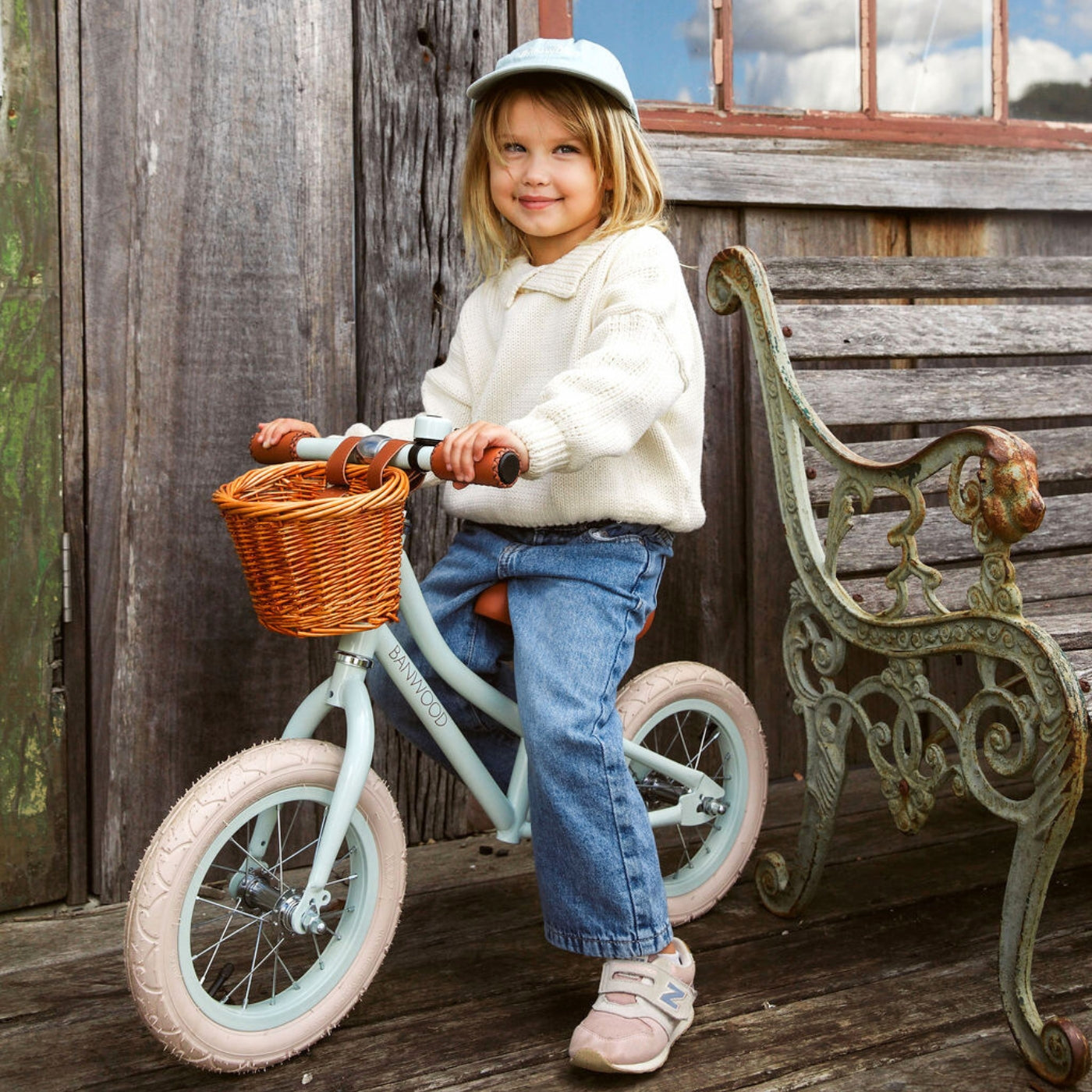
Banwood's First Go has a saddle range of 38 to 50 cm. When your child's saddle is at the top setting and their knees still bend awkwardly when seated, the bike is too small. Their inseam has outgrown the maximum saddle height.
This usually happens around age 4.5-5 for average-sized children, sometimes later for tall kids who started early.
Sign 2: They glide for 5+ seconds with feet up — confidently
This is the readiness signal for pedals. If your child can lift both feet, balance for 5-10 seconds, steer around obstacles and stop on command, the cognitive part of cycling is solved. Pedals just add a coordination layer.
Watch them ride for a few sessions — don't ask, observe. Are they still resorting to feet-down regularly, or are they confident gliding? Quality of glide matters more than length.
Sign 3: They're asking for "a real bike"
Don't underestimate this. By age 4-5, children compare bikes with friends. The desire for a pedal bike is often more about identity than physical readiness. If signs 1 and 2 are also present, give them what they're asking for.
If they're asking but signs 1-2 aren't there yet, have a conversation. Sometimes they're curious. Sometimes they're feeling left behind. Either way, no harm in trying — but be prepared to keep the balance bike close for a backup.
What if only some signs are present?
- Saddle at max but they're not gliding: keep them on the balance bike a little longer. Some children need extra time to discover gliding.
- Gliding well but bike still fits: bonus time. Use this for fun rides, slopes, group rides with siblings.
- Asking but not gliding: try the new bike but don't force pedals. Often, asking is just curiosity — they may go back to the balance bike.
What pedal bike size after the balance bike?
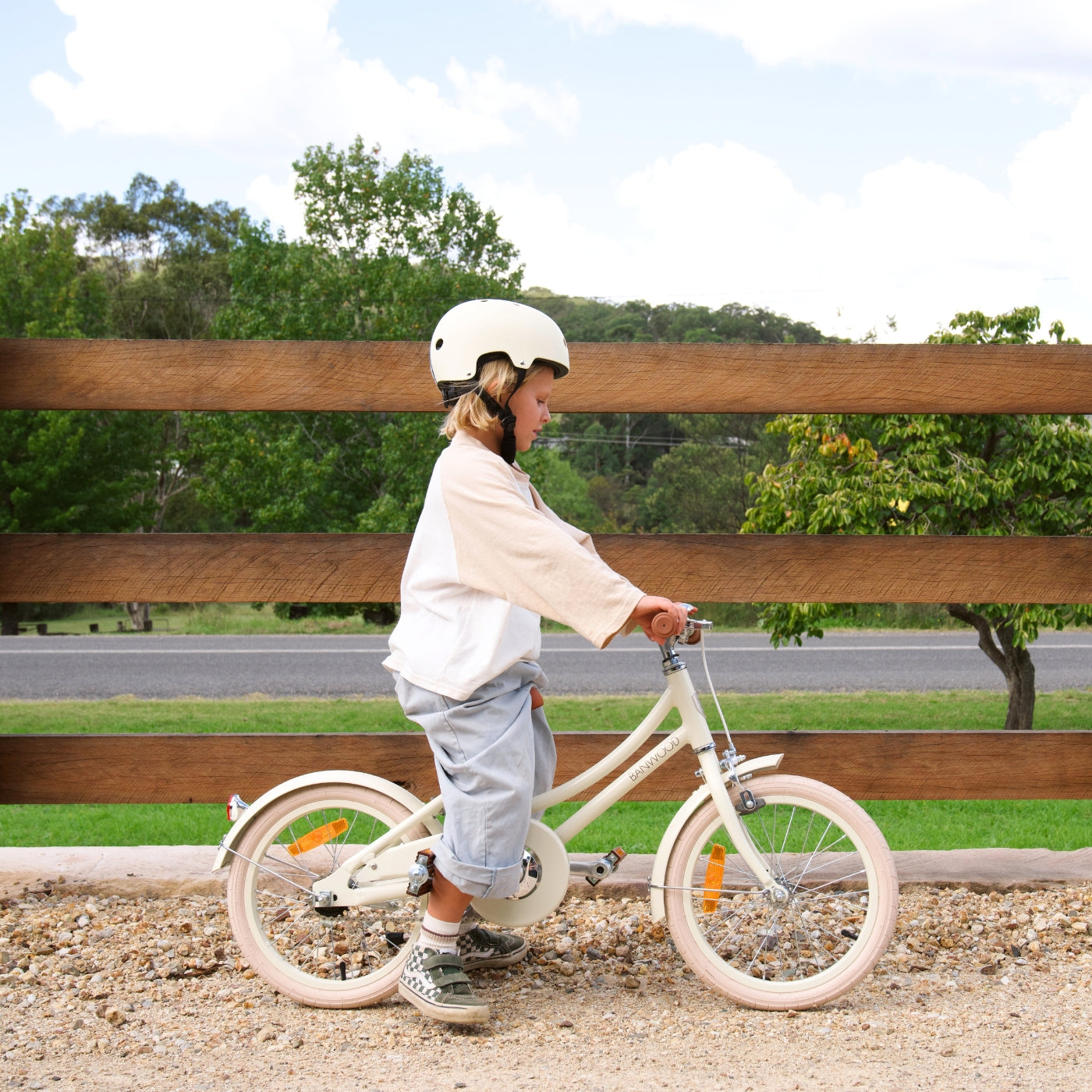
Almost always: 14". The leap from 12" balance to 14" pedal is gentle — they recognize the bike, just with a new component. 16" is too big a jump for most kids transitioning from a balance bike.
See the Banwood Classic 14" (designed for this transition).
How to make the transition smooth
- Lower the new pedal bike's saddle so feet sit flat on the ground.
- Let them scoot/glide first (just like the balance bike) — re-familiarize with the new bike.
- Then say "put feet on pedals when ready" — don't force.
- First successful pedal-only ride is usually 1-3 sessions away.
- Gradually raise saddle as confidence grows over the next month.
Don't put on training wheels
Children who learned on a balance bike already have balance. Training wheels add a step backward — they teach the wrong steering habit. We include training wheels with our pedal bikes for parents who want them, but most balance-bike-trained kids never use them.
Read next
- How to measure your child's inseam
- 12" vs 14" vs 16" — choosing wheel size
- Age Guide — what bike for what age
Free EU shipping over €100 · 14-day returns · 2-year warranty.
