
Dlaczego waga rowerka dziecięcego liczy się bardziej niż cena
Adult cyclists obsess over bike weight because it affects performance. For kids, weight matters even more — but for a different reason: it affects whether they ride at all. A bike that weighs more than 30% of the child's bodyweight feels unwieldy, scary to handle, and exhausting.
The 30% rule
Pediatric biomechanics research suggests a child's bike should weigh no more than about 30% of the child's bodyweight. Why? Because handling a bike (lifting it, picking it up after a fall, walking it up a curb) requires that the child can manage its weight independently.
| Child weight | Bike should weigh under |
|---|---|
| 10 kg (~age 2) | 3 kg |
| 15 kg (~age 4) | 4.5 kg (balance) / 6 kg (pedal) |
| 20 kg (~age 5-6) | 6 kg |
| 25 kg (~age 7-8) | 7.5 kg |
These are guidelines, not strict rules. Steel-framed quality bikes (like Banwood) often weigh slightly more than aluminum competitors but offer durability that justifies the trade-off.
Why mass-market bikes fail
Cheap bikes from supermarkets and online marketplaces often weigh 7-10 kg even at the 12" balance bike level — far too heavy. The frames are made of low-grade steel, components are heavy, and the result is a bike that the child can barely move.
Side effect: the child doesn't ride. They lose interest. The bike becomes garage decor.
What Banwood weighs
| Model | Weight | For child weight |
|---|---|---|
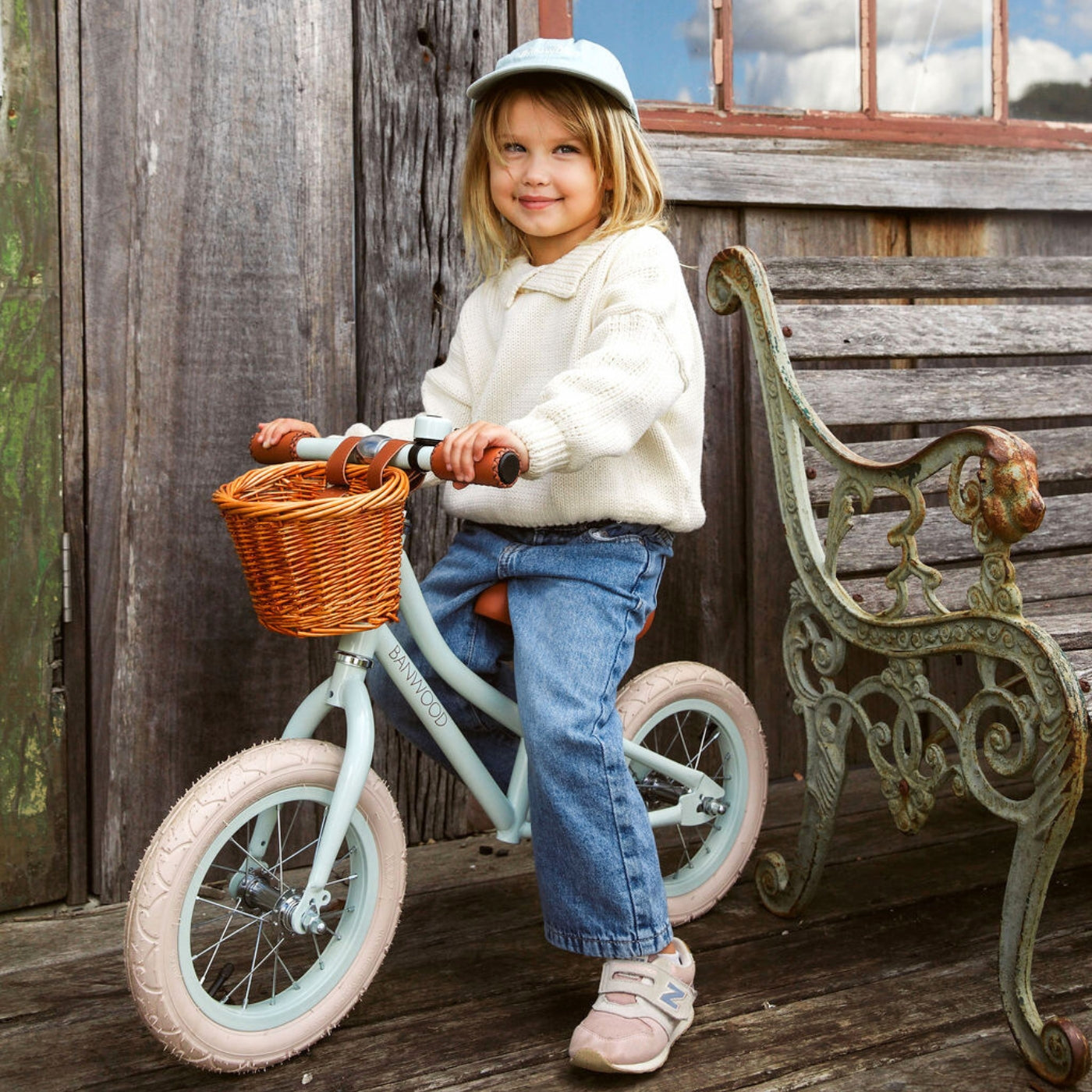
| Banwood First Go (12" balance) | 4.1 kg | 13+ kg (~30% rule) |
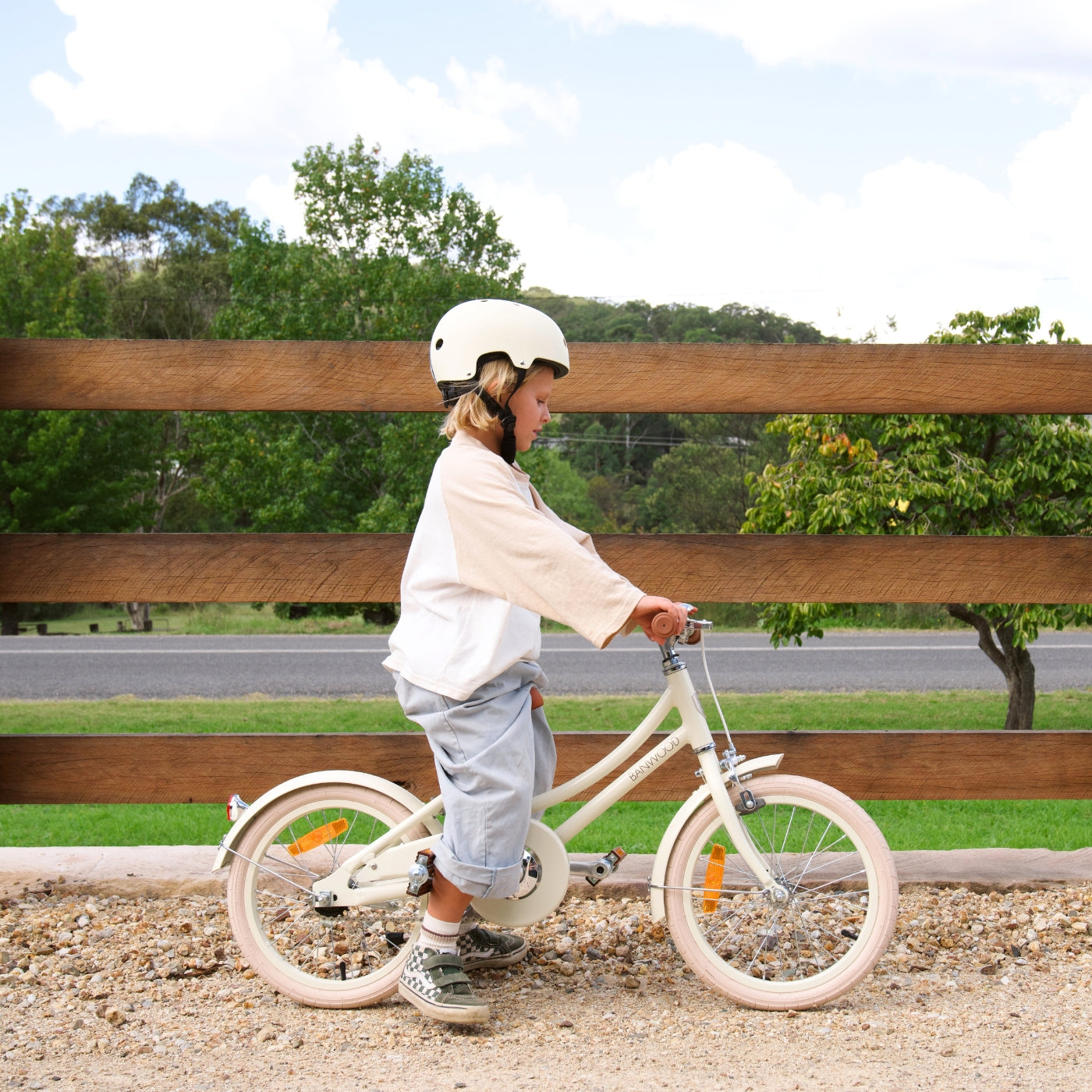
| Banwood Classic 14" | 7.9 kg | 26+ kg |
| Banwood Classic 16" | ~9 kg | 30+ kg |
Note: our balance bike at 4.1 kg is heavier than ultralight options at 3.0-3.5 kg. The trade-off is durability — Banwood's steel frame supports 3 children's worth of riding. For parents prioritizing weight above all, lighter alternatives exist; for parents prioritizing longevity and design, Banwood is the answer.
How weight affects learning
For balance bikes (ages 2-5)
A heavy balance bike is hard to start, hard to steer, hard to pick up after a fall. Children who fail repeatedly to manage the bike develop bike-shyness. A 4 kg bike feels manageable; a 7 kg bike does not.
For pedal bikes (ages 4-7)
Once pedaling, weight matters less for forward motion (gears help) but matters a lot for handling — turning, braking, lifting onto curbs, walking next to the bike. Lighter pedal bikes give children more autonomy.
What to ignore in weight specs
- "Lightweight aluminum frame" on a 9 kg balance bike — the components were heavy, not the frame.
- Brands that don't disclose weight — usually because it's high.
- "Heavy duty for active riders" as positioning — adult marketing applied to kids' bikes.
Other things that matter alongside weight
- Geometry: low stand-over height matters more than weight for first bikes.
- Saddle range: a 12 cm adjustment range (like Banwood's) means the bike grows with the child for years.
- Q-factor (pedal width): narrow Q-factor for kids is essential.
- Brake levers: pinch-free design.
Read next
- How to measure your child's inseam
- 12" vs 14" vs 16" — choosing wheel size
- When does your child outgrow their balance bike?
Free EU shipping over €100 · 14-day returns · 2-year warranty.
