
Dlaczego boczne kółka utrudniają naukę
If you grew up with training wheels, the idea that they "make learning harder" sounds wrong. You learnt eventually. Most of us did. But "eventually" is the problem — and "eventually" usually came with tears, multiple "graduation day" attempts, and a few months of stabiliser dependency.
Here's why the conventional wisdom is wrong, and what changed in the last 15 years.
What cycling actually is (physically)
Cycling is a balance sport, not a propulsion sport. The hard skill is keeping the bike upright when it wants to fall over. The easy skill is making the wheels turn.
If you watch any 4 year old who's never pedalled before, they'll figure out pedals in 5 minutes the moment balance is solid. Pedals are trivial.
But if balance isn't solid, no amount of pedalling will make a child a cyclist. They'll wobble, fall, and quit.
How training wheels prevent balance learning
Training wheels (stabilisers) keep the bike vertical no matter what the rider does. The bike does not lean. It does not require any balance correction.
The result: a child can pedal a bike with training wheels for years without learning a single thing about balance. The skill they need most is the skill the bike never asks them to develop.
When you finally remove the stabilisers, the child confronts balance for the first time — but now they're moving fast, the bike is heavier (real pedal bike weight), and they have months of "this bike doesn't fall" muscle memory to unlearn.
This is why "stabilisers off" day is famous for tears. The child has to learn cycling from scratch, on the worst possible setup.
How balance bikes get it right
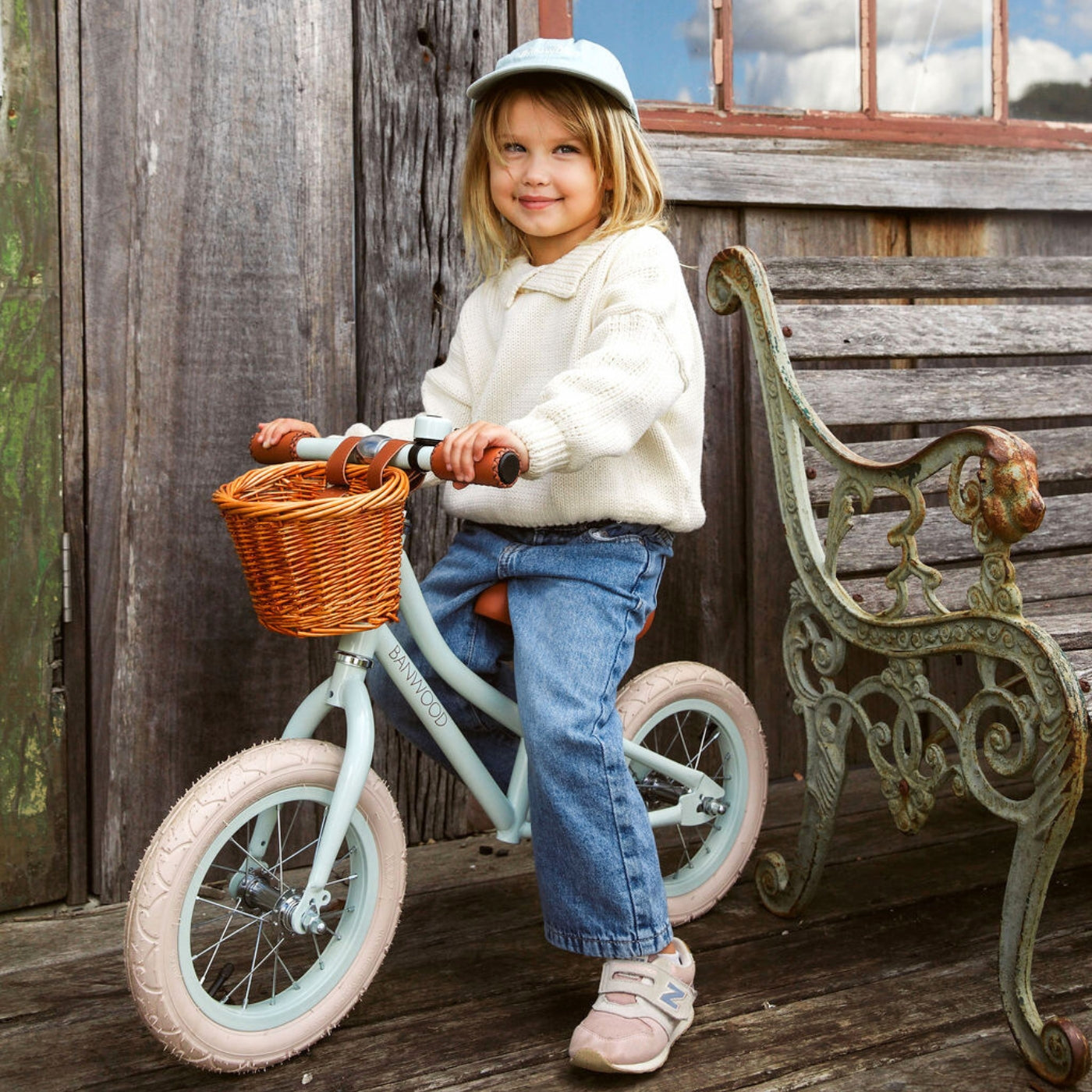
A balance bike is a pedal bike with the pedals removed and the saddle low. The child propels with their feet, like Fred Flintstone. The bike DOES lean. Balance correction is required from the first second.
Within 2-3 sessions, the child glides for several seconds at a time, steers naturally at speed, stops with feet, and has internalised lean-balance.
When this child moves to a pedal bike (typically age 4), the only new skill is turning the pedals. They get it in one session, often in 30 minutes.
There are no stabilisers in this story. There never need to be.
"But my child is already on training wheels — what now?"
Scenario A: 3-4 year old on stabilisers
- Remove stabilisers today.
- Lower the saddle so feet are flat on the ground.
- Spend 1-2 weeks treating the bike as a balance bike (no pedals required).
- After 1-2 weeks, expect natural pedalling.
Total time investment: ~2 weeks. Total stabilisers needed: zero from now on.
Scenario B: 5-7 year old on stabilisers
- Have an honest chat. "We're going to take the training wheels off. It's going to feel different. We'll go slow."
- Find a slight grassy slope. Saddle low, feet flat.
- Coast first (no pedals). Once they coast confidently — usually 30 minutes — pedalling follows naturally.
Most 5-7 year olds learn this in a single afternoon.
The "but I learnt with training wheels" argument
You did. Many of us did. We also wore no helmets, sat on the lap of a parent driving, and ate dirt. Three things changed:
- Balance bikes became mass-market around 2008. Before that, parents didn't have an obvious alternative.
- Research caught up. Multiple studies on motor skill acquisition show balance is foundational, propulsion is secondary.
- Bike weight dropped. Modern kids' bikes are 5-6 kg. The bikes our parents bought us were 9-12 kg.
Modern lightweight balance bike + pedal bike combo wasn't really feasible 30 years ago. Today it's the standard of care.
What to buy
If your child is 18 months to 4 years old: a balance bike. Banwood First Go fits inseam 28-40 cm.
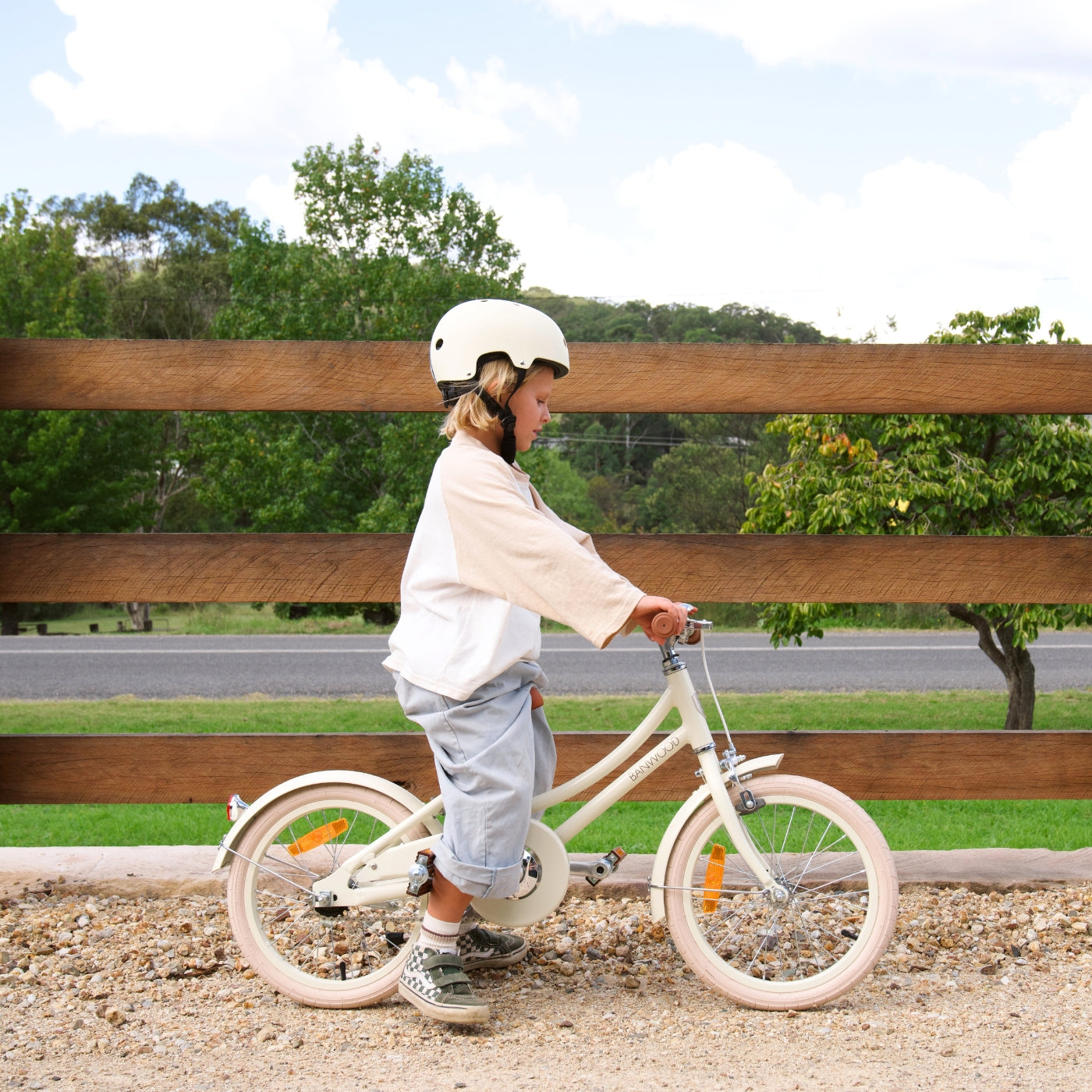
If your child is 4-5 and never had a balance bike: still buy a balance bike. Use it for 2-4 weeks, then move to a 14" or 16" pedal bike.
If your child is 5-7 and on stabilisers: buy a 14" or 16" pedal bike (right size for them), remove stabilisers, follow Scenario B.
Read next
- 5 mistakes parents make teaching cycling
- When does a child outgrow their balance bike?
- Banwood pedal bikes
Free EU shipping over €100 · 14-day returns · 2-year warranty.
